
1.Policy Measures in Force:
Curbing Excessive Competition is No Slogan
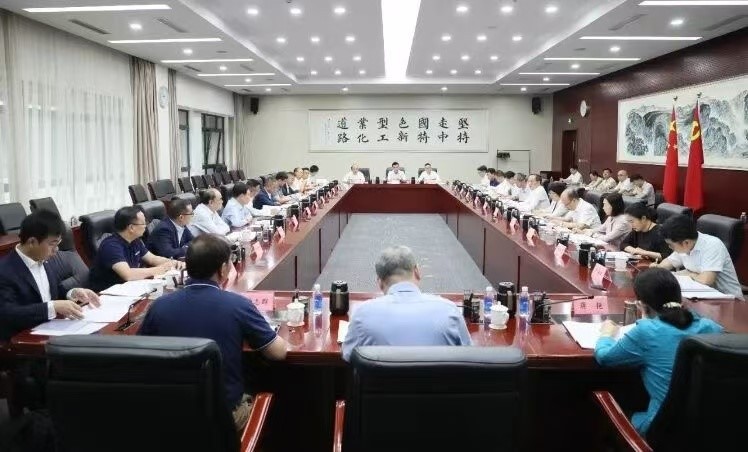
The early July meeting of the Financial and Economic Affairs Commission set the tone to curb excessive price competition, and with the PV sector being repeatedly named as a key industry, the firmness of the policy stance is beyond doubt. On July 3, the Ministry of Industry and Information Technology (MIIT) held a symposium with PV manufacturing enterprises, listening to reports and suggestions from enterprises and industry associations. The core logic is clear: accelerate the clearance of backward production capacity and reshape a healthy supply-demand pattern.
Recent market changes are initial evidence of this logic:
Expectations Lead the Way: Since early July, polysilicon futures have surged 17% cumulatively, reflecting significantly strengthened market confidence in supply-side optimization.
Price Hike Transmission: Data from the China Silicon Industry Association shows that the average transaction price of n-type polysilicon materials jumped 6.92% month-on-month to 37,100 yuan/ton this week. Silicon wafer enterprises quickly followed suit, with prices of wafers of various sizes rising 8%-11.7% on July 9.
Key Signal: Even in the module segment, a downstream part of the main chain, some manufacturers have raised prices of recent shipments (+0.02 yuan/W). A sustained price increase in modules will further open up profit recovery space for the entire industry chain.
Doubting the policy effect? Look at the essence! The goal of curbing excessive competition is not to let all enterprises "get their fill," but to swiftly eliminate high-cost, low-efficiency backward production capacity through the dual forces of policy and market, until supply and demand reach a new, healthier balance. Policies have made their stance clear, a perception gap in the industry is emerging, and the starting gun for the elimination race has been fired!
2.A Life-or-Death Game: Cost is the Only Pass
Under the rule of "prohibiting malicious low pricing," cost competitiveness has become the most direct and ruthless yardstick to distinguish "advanced" from "backward" enterprises. Enterprises unable to keep costs at the industry's leading level will be the first to exit in the market-oriented clearance guided by policies. Therefore, mastering and continuously iterating core cost-reduction technologies has become the only way for PV enterprises to survive and develop.
Current industry focus on cost-reduction paths clearly points to several key technological directions:
1.Granular Silicon: Subverting the traditional rod silicon process, it reshapes the cost structure of silicon materials with remarkable advantages: 70% lower energy consumption, 2-3% less raw material loss, and a 30% shorter ramp-up period.
2.Thinning: Moving toward 100μm or even 70μm. For every 20μm reduction in wafer thickness, silicon consumption decreases by about 1.2g per wafer, and slicing costs drop by about 3%, making it key to reducing reliance on silicon materials.
3.Silver-Free Technology: This is the most disruptive cost-reduction battlefield in the cell metallization process! Silver paste has long accounted for 30%-40% of non-silicon costs, while silver prices remain high (copper prices are only 1/100 of silver). Replacing or significantly reducing silver paste usage is the "holy grail" to break through cost bottlenecks. Technologies such as copper plating and silver-coated copper have attracted much attention, with their core goal being "silver removal" or "silver reduction."
3.Outlook for the Endgame:
Technology Determines Life and Death
Amid the industry's fervent exploration of "silver-free" solutions, Ulica deeply realized that technological innovation is the key to breaking the deadlock. Ulica's stacked grid "Qin" modules, adopting SCenergy's exclusive patent – the ultimate 0BB technology, can save 75% of silver paste usage, and in the future, there is a chance to realize silver-free, which will greatly reduce the production cost. This not only significantly reduces production costs but also improves light utilization, perfectly aligning with the industry's trend of cost reduction and efficiency improvement.

The reshuffle in the PV industry, driven by strong policies to curb excessive competition, may be more brutal than expected. Yet the endgame is clear: only enterprises that continuously invest in R&D, master and mass-produce core cost-reduction technologies (such as granular silicon, ultra-thin wafers, and real silver-free/silver-reduction solutions) will become the final "survivors" and "winners."
Only by driving extreme cost reduction and efficiency improvement through technological innovation can enterprises secure an unshakable leading position in the new industry order.


